Port Ellen, Bowmore & Bridgend
Drive over the Islay road that floats on peat between Port Ellen and Bowmore, the two largest settlements on the island. Visit Islay House Square and Community Garden and enjoy stunning views from the High Road on your way back to Port Ellen. Highlights:
- Bowmore Distillery
- MacTaggart Leisure Centre
- Community Garden Bridgend
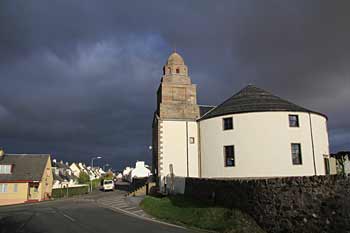
- Bowmore & Round Church
Port Ellen
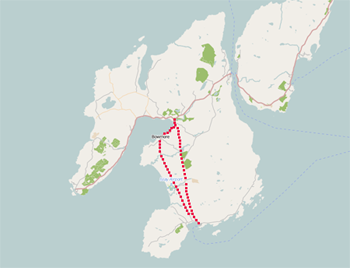
From Port Ellen drive along Port Ellen Maltings and follow the main road, the A846. This road is built on peat and your car's suspension can be tested, so watch your speed. After a few miles you reach Islay Airport at Glenegedale and the famous Machrie Golf Course, both on your left. This is a long and straight road, also referred to as the "Low Road". If you fancy a coffee or snack you can stop at the airport. Inside, you can grab a tasty burger at the Gate 1 cafe! On both sides of the road are peat banks where some of the distilleries extract the peat for their whisky making process.
Bowmore
As you cross the River Laggan and enter Bowmore, the Round Church on top of Main Street is not to be missed. Bowmore is the capital of Islay and has many shops, restaurants, a swimming pool, the largest supermarket and the oldest distillery on the island. If you drive down Main Street and continue all the way down to the pier, you'll find parking spaces and the famous view of Bowmore Distillery on the shore of Loch Indaal.
Bowmore to Bridgend
A mile outside Bowmore is the Gaelic College on your left. Driving along Loch Indaal it's hard to not get distracted by the beautiful views and wildlife. In the wintertime, there are thousands of geese roosting on the mudflats at the head of the loch. Before Bridgend is a hill on the right with a monument erected for John Francis Campbell, known for his "Popular Tales of the West Highlands". This monument, in the shape of an obelisk, was an initiative of the Glasgow-Islay Association and is in fact the second monument. The first one was blown away in a gale in about 1911. The views from the hill over Loch Indaal are breathtaking.
Bridgend
Bridgend is located centrally on the island at the intersection of the A846 and A847 roads. It has a hotel and bar, an excellent shop, a petrol station and Bridgend Woods, where you can stretch your legs in beautiful surroundings. Also in Bridgend is Islay House, occupied by an American Navy pilot, Islay's Community Garden and Islay House Square with the local brewery, Islay Ales, and other interesting shops.
You take the Low Road, I take the High Road
Referring to the song "Bonnie Banks of Loch Lomond" there is a Low Road and High Road on Islay as well. While many drive the Low Road, you may want to take the High Road, the B8016. Coming from Bridgend, drive back to Bowmore. Right after the monument on the hill, which is now on your left, go left on the single-track road. The Low Road is usually very quiet. The views over the central part of Islay are beautiful and on the higher parts of the road there are stunning views over Laggan Bay as well as towards the Rhinns of Islay and the Oa.